Silksong
8 minutes • October 4, 2025 • Thoughts
Many years ago, I played through about 90% of Hollow Knight and decided I hated it. I quit on the dream version of False Knight, the Failed Champion. I wanted to get the true ending, but didn’t enjoy the content it was taking to get there. I put it down, and didn’t think about it again.
That was until Silksong was released. A friend of mine was playing through it again, and since Silksong was on Game Pass, I figured I’d give the series a try again. I also had grinded some extremely difficult games since then and found I had enjoyed difficulty a lot, and early reactions to Silksong were that it was an extremely difficult game. So I booted up Hollow Knight, and rushed through a 100% completion run.
Hollow Knight
I can say now that I understand why people like the game as much as they do. The controls are tight, the world and how Team Cherry decides to tell its story indirectly is interesting, and the bosses can be engaging once you have a grip on the patterns. My opinion has also greatly swayed by the knowledge that this game was made by just four people.
On the other hand, some of the frustrations with the game mechanics remain. One thing, for example, is taking damage when I walk into an enemy that makes no physical movement to actually physically hurt my character, also known as contact damage. I think it’s absolutely insane that when I walk my character into even a stunned enemy, I take damage. It’s not a problem for most people who beat the game because you get used to spacing correctly, but the fundamental idea of contact damage in Hollow Knight frustrates me. I feel that it’s more a relic of old game design where animating something doing damage to you was resource intensive so the enemy physically hitting you was implied. I also feel like why you take damage could easily be explained by an animation that could be looped into the game’s worldbuilding (whatever sickness is haunting Hollow Nest jumps out of the enemies at you or something).
Other mechanics as well such as: 1. jumping from the edge of platforms not having any sort of leeway, 2. your only other source of damage sharing the same resource as the one you use to heal, 3. your heal locking you in an unforgiving ground animation, 4. scant customization outside of your limited charms, and 5. bosses that simply slam all over the screen; these were all things that irritated me significantlyon this playthrough. My chief complaint though, is that while the combat was tight, it’s fundamentally one dimensional, relying on the player to position correctly instead of engaging with the mechanics through a parry or shield or any other sort of mechanic. And your only two sources of damage are your nail (no resource cost), and magic (shared resource with your heal, also generated from hitting with your nail), so you end up relying on the nail for a lot of fights where you’re not sure if you’ll need your heal or not.
Okay, Hollow Knight rant done.
Picking up Silksong
Silksong addresses all of this. Where there was a lack of customization to your character, now there were changes to movesets, equipment, blue charms, yellow charms, and silk skills. Healing can be executed in the air now, or the ground. There are now a wide variety of options for damage. And the best part: there are small bosses that feel like dances where big bosses who slam half the screen used to be. Well, at least sometimes. We’ll get to that in a bit.
Silksong recognized its predecessors’ mistakes and strived to address them. The Soulslike difficulty that Hollow Knight tried to emulate was now a lot more interesting. I would say that in trying to emulate Dark Souls, Hollow Knight succeeded in making a 2D version with its own interesting mechanics (such as pogoing), but failed in capturing some of the more important elements of combat that is so appealing with the Souls series. Silksong pushes the series into being a serious contender for game of the year, especially as a game made by such a small team.
I want everyone to understand that this game is true art, with stunning visuals, great music and engaging gameplay. I want you, dear reader, to understand this before I start discussing elements of the game that I think could be better. When I play a game like Assassins Creed IV: Black Flag, I don’t feel the need to have conversation about the gameplay mechanics because it’s so plain to any human being that plays multiple Assassin Creed games that there is a fundamental problem with the game that Ubisoft chooses to ship to players. Silksong is worth talking about because it does push the industry further, and I believe if we focus on the good, we can continue making awesome, beautiful art.
Difficulty in Video Games
Difficulty in video games is a topic that has been so talked about to death, that even saying it’s been talked about to death is a cliché. But difficulty lies at the heart of what appeals to the audience of Silksong, with over 33% of the playerbase on Steam having played Sekiro before. As a disclaimer to where I stand in the conversation, Sekiro is one of my favorite gameplay games of all time. I want to be totally upfront because people who talk about this topic can obscure how they feel to appear neutral. I’m not neutral, but I do understand people who struggle with difficult games, especially players who are newer to games. My opinion is that people who struggle to persevere through these difficult games, where there are TONS of options to conquer these difficult fights, will find deep satisfaction in conquering the fights they see as “too hard.”
Now, that being said, I also believe difficulty is an extremely difficult thing to tune correctly. Too much and it becomes annoying, too little and you don’t spice the dish properly. In the case of Silksong, I constantly found myself in awe of how much Silksong respects its players. It constantly asks the player to push themselves as hard as they possibly can.
Experience with Bosses
…And yet… Many of the game’s bosses fail to really push the player beyond what they’re comfortable with. Bosses like Widow and Lace 1, 2, and 3, and Phantom stand out as some of the best bosses, feeling more like dances where you can only land a hit or two before you’re defending yourself again.
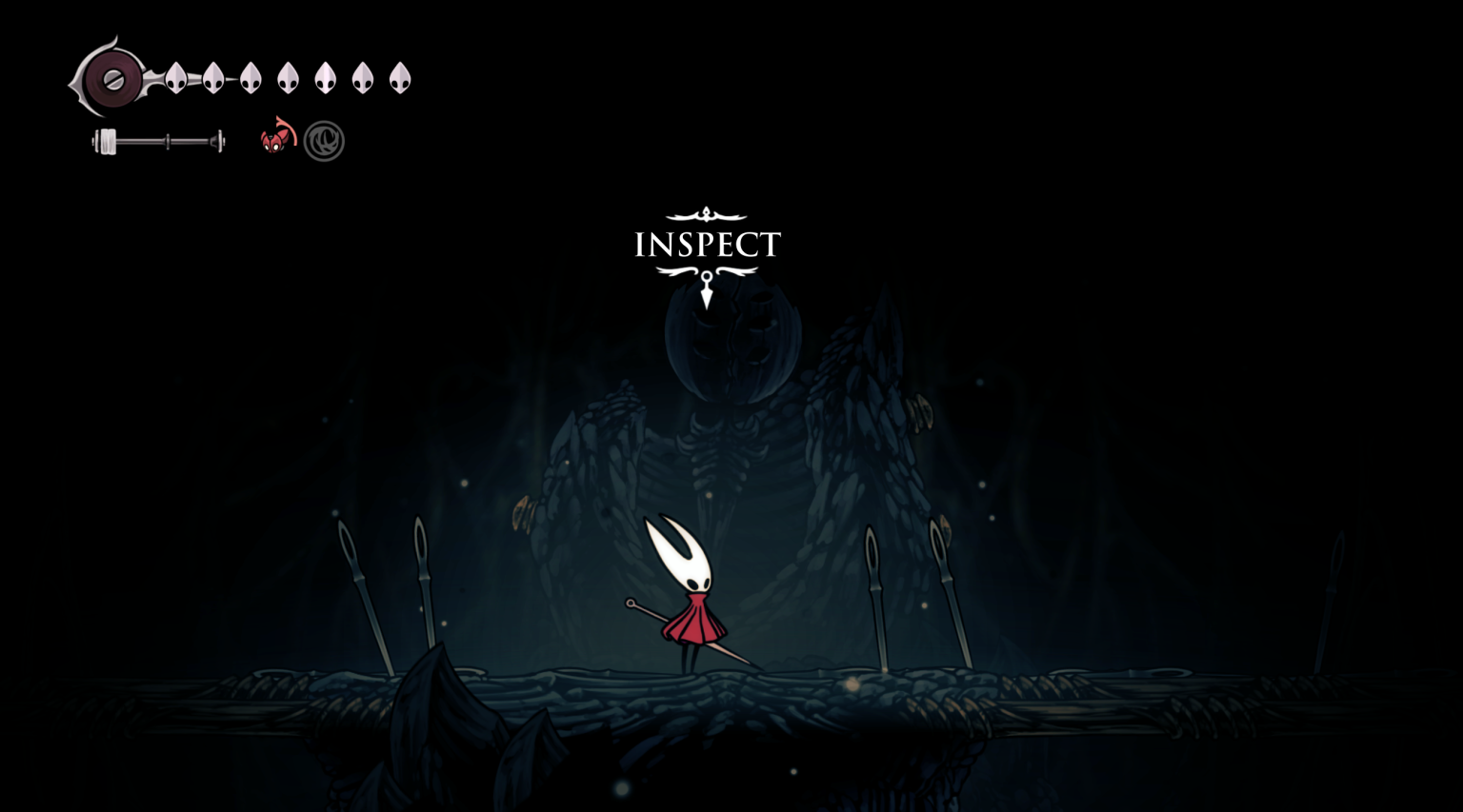
Widow was an especially standout boss for me because it was your first encounter with the evil of the world, an agent of the one controlling all the bugs in the world. In the first phase, it’s clear that Widow wields significant power, and is using it to try and slam you using the bells that surround. The Widow’s behavior comes off as haughty, yet cautious, through its initial slowness, careful not to bring the room where it resides down through a careless slinging of its walls at Hornet. As the fight progresses though, Widow drops this behavior in favor of total annihilation, slamming bells faster, and at different angles in order to stop this clearly lethal bug that challenges it.
Lace 1 was probably the first boss where I thought: “Holy shit, this game might be good.” It’s clearly a starter boss that will evolve as the game continues, but it introduces the thing that Hollow Knight desperately needed: it introduces a boss that is the same stature as you, with your same weapon, with similar powers, who can parry you. It’s not the big monster slamming against the walls that scares me, it’s the enemy just like me who moves like me, with a similar weapon, that parries my attacks with that small weapon. THAT worries me.
While I do believe these bosses significantly push the envelope for what bosses can be for 2D games in general, I also believe that they did not push it far enough, and this lack of boss difficulty is Silksong’s biggest problem. Lace 3 ESPECIALLY was so close to being exactly what the game needed, but right when you lock in and beat phase 2, that’s it, the game ends. I beat phase 1 without taking damage after about 30 minutes of attempts, music blasting, and was ready to smash phase 2 so I could lock in for phase 3. Yet, Lace 3 ends like many of Silksong’s best fights: leaving the player wanting more.
In many ways, the game respects the player. Making the player be completionist to unlock Act 3. Many similar Path of Pain gauntlets throughout the game (Cog Core, top of the world for mushroom boy, etc.) Damage significantly increased from Hollow Knight. The existence of Bilewater. There are many things I can point to in the non-boss fight gameplay where I can say: “Damn, they really want me engaged when playing this game.” Unfortunately, when it comes to the boss fights, I think Silksong falls just short of being an amazing game, and that’s ignoring the plethora of either boring big bosses which slam everywhere or the just straight up one shottable bosses.
Dissatisfaction 100%ing
Even though Silksong evolves its gameplay past its roots in Hollownest, I think it falls short of what it could’ve achieved. That’s not to say that I don’t have high hopes for the future in either Silksong’s DLCs or the next iteration that Team Cherry chooses to make, as I think they not only have a solid foundation for some better bosses, but also are probably going to receive a lot of feedback about what worked and what didn’t in this new game. But for me, the bosses were a letdown, especially after putting so much time into 100%ing the rest of the game (32 hours to the boss of Act 2, 75 hours total for full completing Act 2 and Act 3). There is simply no other way for me to say that spending over double the time seeking out these challenges only for me to take an hour on Lace 3 for 100% completion was just disappointing.
Characters?
Besides bosses, I had some issues with some of the characters feeling like they were just there to satisfy some fan desire (Sherma, Sharka) or having almost no personality at all (Seth, Ballow). I only really realized this when I did the final quest for Garmond and Zaza, and was impressed with not only the setup for this quest but how well it was executed in the overall plot. I also thought that Act 3 should’ve been designed so that you rediscover the map again. I don’t think it’s a huge ask of players to reverse discover the map, especially since you’ve been through it once, and that making all of it available at once is almost too overwhelming as there is so much optional content that demands the player skips it to keep their sanity. I also felt slightly negatively/neutral about having to redo Mount Fay ~10 times by the end of the game. It felt like challenge at first but by the time you go there for whatever side bullshit you’re doing for millionth time, you kinda are just like “fuck, I have to go back there, that’s going to be annoying,” and then just do it. If things were either a bit more bundled or a little less annoying in places like Fay, that would’ve been a bit better.
Final Thoughts
Overall, I enjoyed my time in Pharloom and applaud Team Cherry for making something unique and progressing their IP in a meaningful way, especially in their new bosses (despite the fact they could be a bit harder).