12 Angry Men
5 minutes • April 25, 2023 • Thoughts
Ah, 12 Angry Men. This year is the third time I’ve watched it, and it somehow gets better every time. If you haven’t watched this legendary piece of cinema, you should watch it immediately. There are few pieces of media that stand the test of time, dated by themes, tropes, people, characters, technology. This movie is one that heartily withstands the perilous passage.
I’m not sure when the first time I watched it was, but I do remember that it was not my choice. I think it was in one of my social studies or history classes growing up. All I remember was being happy that the jurors reached the correct verdict and rolling my eyes at the racist guy. Today, after rewatching it again, I can easily say that this movie is one of the best ever made.
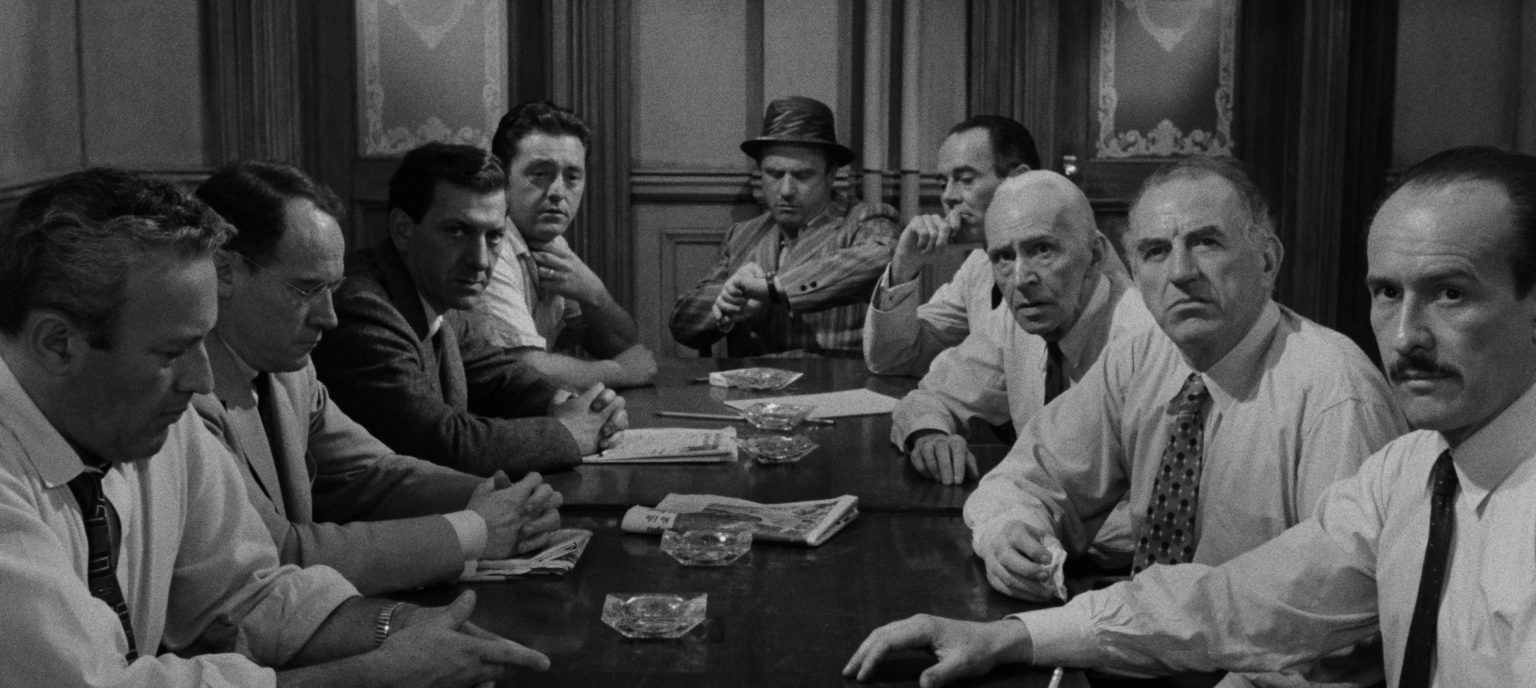
There is no action. This movie is about twelve men, sitting in a room talking. That’s it. Twelve men of different ages, temperaments, and different experiences have all been assembled by the system inherited by us to judge the fate of a single man.
We start with shots of the courthouse from below, showing the grandness of the building. The camera then pans through various shots of the inside of the courthouse, people going about or celebrating, until we get to a shot of two doors where a guard shushes the people outside. What’s going on inside this room is serious. We then transition inside to see a judge talking to a room full of quiet people.
He says, “To continue, you’ve listened to a long and complex case: murder in the first degree. Premeditated murder is one of the most serious charges tried in our criminal courts.” As he says this, he puts his head on his hand and scratches his eye. He’s bored. Whether it’s because his mind is made up or because he’s just doing his job and it’s ultimately out of his hands or he’s said what he’s saying so many times trying to impress the responsibility on people, it doesn’t matter. What we see is a system at work. To us, and to the jurors who have not heard this before, we are absorbing this information like the little sponges we are. What the judge says mechanically through practice has some weight to us, although not right away.
The judge continues and says the death penalty is mandatory in this case, so if the jury does judge him as guilty to understand what they are doing. He then reminds the jurors of the “grave responsibility they all face,” then takes a sip of water and places his head back on his hand, coughing a little. The jurors are then sent to the room, with some of them giving small glances back at the accused. We then get a shot of the accused’s face, as he stares helplessly at the men who will decide his fate.
From here, the men get in the room and get situated. They relax and shoot the shit together before getting down to business. The foreman “leads” the meeting, although no one really knows what the proper procedure is. This is kind of awesome because it’s totally how normal meetings like this go, “Alright guys, we can talk about it and vote or vote then talk about it, I’m not going to make any rules.” They vote by raising hands. 11-1, guilty to not guilty.
Then, they talk. The rest of the runtime features these men talking about whether the boy is guilty of murdering his father. Race, culture, memory, technology, psychology, everything is thrown back and forth between the men as they try to determine who is right. Right away, Juror #3 and Juror #4 establish themselves as the powerhouses of the guilty argument. The other jurors are similarly convinced of the guilt, but Juror 3 is a loud, charismatic man who pushes the emotional argument throughout the movie.
A direct quote from the script:
“(standing up angrily.) What do you mean there are no secrets in here! I know who it was. (He turns to No. 5) What’s the matter with you? You come in here and vote guilty and then this slick preacher starts to tear your heart out with stories about a poor little kid who just couldn’t help becoming a murderer. So you change your vote. If that isn’t the most sickening…”
On the other hand, Juror 4 operates the logical side of the guilty argument. He is not as emotionally compromised as some of the other jurors arguing from his side. He is detached, cold, but precise in what he says and only argues about the facts.
Juror 8, Henry Fonda, is the single holdout against the eleven. He doesn’t say that the boy is not guilty, just that he doesn’t know if he is, that he has a “reasonable doubt.” This man, this single beautiful man, is the only man who is awake enough to really think about what he’s doing. And it’s only from his careful observations and due diligence that he’s able to convince the others over a rigorous discussion that there may be a reasonable room for doubt if the kid is actually guilty.
I would love to go over every scene in the movie and give you my thoughts on each of them, but that’s not what this is really about. From when we are young, we hear about how boring jury duty is, and how you get underpaid to sit in a hot room while you listen to lawyers talk nonsense at you. Or, if you’re plugged into crime shows, you can get a really dramatic version of what actually happens in a courtroom. 12 Angry Men attempts to stir the viewer and the eleven men out of the trance that they’re in. The movie is still dramatic, but it doesn’t have to stretch facts about how the system operates to do so. Instead, it takes these twelve normal men and asks them what they really think. It invites the viewer to posit their own position when Juror 8 gives up and says he will vote guilty if no one else votes.
12 Angry Men isn’t just a reminder of our responsibility to our institutions, it reminds us of why they’re there in the first place. Even if everyone else is against you, all it takes is one person to lay out the facts as they see them to convince others to change their minds. In this case, Juror 8 convinces 11 others to spare the life of an innocent boy. In our democracy at large, anyone can use their voice to convince others, and the votes that those others cast can affect all of us just like it affects the accused boy. And all you need to convince people that this is the right way to live life is twelve men, a room, and a camera.