Whiplash
14 minutes • August 15, 2023 • Thoughts
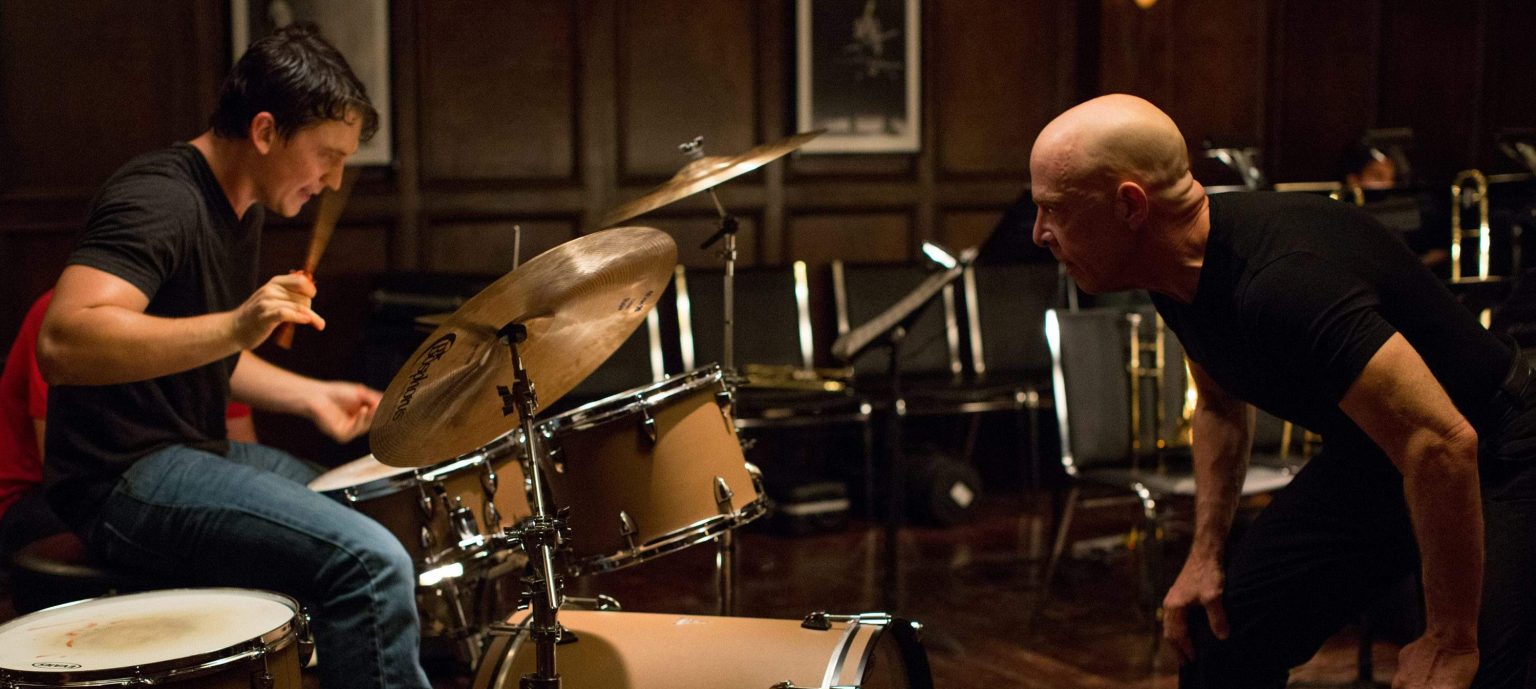
When I finished Whiplash, I sat with a fascinated horror at what I had just witnessed. Somehow, through the abuse, through the coddling, in one of the most important performances of his life, Niemann prevails. And even though I was happy that he finally was able to overcome everything and give a performance that even Fletcher couldn’t deny, it wasn’t him or his victory that I was thinking about. It was about Fletcher’s victory, and his speech to Niemann at their dinner together. Had Niemann’s victory justified Fletcher’s behavior?
It’s not often that you get to see both the protagonist and antagonist of a film get exactly what they wanted, yet that’s what we get in Whiplash. So, what are the writers saying with Fletcher’s victory? Is pushing someone beyond what they’re comfortable with, beyond their limits, beyond what society says is acceptable, truly a way to achieve greatness?
I thought about a couple of things when mulling over this question. For one, I thought about when I was a teenager doing sports. I think it’s pretty common knowledge to most people who have played or coached sports that you have to push the athlete/yourself to the maximum they can actually tolerate. This is done mostly because the athlete might not be familiar with their true limits, but also because when they reach that limit, that’s when they will achieve the most growth.
When I was rowing, there were many times where I was on the erg and would think, “There’s no way I could do another stroke.” Then my coach would yell at me, and I was somehow able to keep going for another, and another. Each stroke was painful and required focusing my body and mind beyond normal. But, in the end, my coach was right and I was wrong: I could do more.
On the other hand, pushing kids can go way too far. There’s a story I heard recently of a wrestler dying from dehydration at the University of the Cumberlands in Kentucky. According to the lawsuit the family brought against the school, the wrestler told his coaches that he needed to stop, the coaches told him if he did he would be kicked off the team. He kept going but eventually had to stop completely. After practice, the wrestler begged for water but was denied it by the coaches even though kids were trying to help him. He was then kicked out of the wrestling room, where he tried to search for water but died near a shut-off water fountain.
There are limits to what an athlete, or anyone pushing performance, can take, and it’s the responsibility of the person in charge of pushing that person to listen and walk the balance between these two responsibilities.
Next, I thought about what it takes to make a person who doesn’t just succeed in what they’re doing, but succeeds to the point that they’re recognized by their peers as the absolute best at what they do. The Magnus Carlsen/Bobby Fischer’s of chess, or the Wayne Gretzky of hockey, or Serena Williams of tennis, or the Tiger Woods of golf. How do these people succeed at what they do? When you look at the early lives of these people, it’s usually a mixture of natural drive/talent combined with mountainous amounts of work when they were younger to eventually get to where they got.
One final thought. A trope I’ve seen pop up in media is hard work versus talent (Naruto vs Neji, Anakin vs Obi-wan, Azula vs Zuko). The assumption in this trope is that if you work harder than others, then you’ll be able to outperform even the most talented individuals. This is romantic and idealistic, but has a kernel of truth in the real world. Mostly this applies to individuals who don’t train but have talent, as the people who do put in the work and have talent will obviously outperform those that work hard but don’t have that natural ability to do the thing. It’s also probably true that people who have talent feel like they don’t have to work at something to succeed because their early successes might not have required too much work.
Now, what do we get when we put all that together? What it seems like, from where I’m sitting in this big ol’ room we’re all in, is that hard work and talent are really important for achieving greatness. But, it also seems like while those that do have talent and work hard end up succeeding, those that don’t are outpaced by the untalented who work hard. So Fischer, who is at a school where some of the most talented individuals in the country congregate to learn to perform music, wants to push his students that are likely talented, into being hard workers.
I’ll assume we both understand why a teacher would push his students past mediocrity into greatness, especially when given the country’s best material to work with. Now, what do you do? You have to push these kids beyond what they think they’re capable of doing, but how do you go about it? I think the natural inclination is to say: be friends with them. People talk about close relationships with mentors who pushed them to be the best they can be all the time. Totally valid path for driving someone to success. I’ll put this in the S-tier of greatness-making.
But I don’t know if this is the path for everyone. Some encouragement is definitely needed in any sort of coaching/leading in my opinion, regardless of which style you end up choosing. But I think even this friendship-type encouragement requires some level of talent to pull off. Now, on the other hand, there are some other less savory ways of motivating people that we can come up with.
When a coach is yelling at a kid something like “COME ON JEREMY YOU SACK OF SHIT, TWENTY MORE PUSHUPS AND YOU CAN GO HOME,” followed up by, “Great work today Jeremy, see you Monday at 6,” we can probably agree this isn’t in the “friendship” style of coach motivation. But I also don’t think we’ve quite hit the piano teacher smacking her kid’s hands with a ruler tier of motivation. I’m going to say this is somewhere in the middle, and I’ll call it authoritative motivation.
This is probably the default motivation tool for most leaders, and I think it works on most people. Now, you might not make the greatest friends with the people you’re leading, but most people can swing some version of it and people handle this type of authority well. Overall, probably a B+ to A- tier of motivating or leadership, depending on execution.
Now, we get to the abuse/Fletcher style of leadership. There are countless examples of people succeeding even though they had terrible people pushing them toward success. Michael Jackson has made public his fear of his father, who pushed him and the others of the Jackson 5 five hours a day after school to practice dance routines. And if one of the boys got a step in their routine wrong, his father would order them to break off a branch on a nearby tree, with which the father would beat whoever got the moves wrong. In favor of being brief, the amount of abuse experienced not only by the Jacksons but many others across all kinds of industries is disturbing. I won’t speak for you, my dear reader, but I’ll say for myself that as someone who has experienced the light of childhood dimmed at the hands of abusive parents, reading about the things that certain people had to experience growing up to become famous makes me sad. But, and get ready because we do have to talk about this, these people did end up becoming great. The fundamental question in this tier of leadership/motivation: would these people be great without the abuse they suffered?
Fletcher unquestionably both physically (AM I RUSHING OR DRAGGING) and mentally abuses Niemann throughout the movie. Therefore, I think fundamentally the question being asked by the movie is: would Niemann be great without Fletcher?
We see Niemann practicing by himself in the drum room before he gets into Fletcher’s jazz band, but he’s doing it so he can get into Fletcher’s band, because Fletcher’s band has the reputation of being the best in the school. He also only continues these early morning sessions because of Fletcher’s shaming of Niemann on his first day in the band (where he throws the chair at his head).
The movie also makes a point of having Niemann’s father comfort him whenever something is going wrong. If there were other signs in the narrative that the story didn’t believe that Fletcher’s method of leadership was wrong, I wouldn’t have been as horrified at the end. However, after Fletcher embarrasses Niemann in the last performance, we see Niemann’s father rush out of his seat to go and comfort Niemann. Right after Niemann walks off the stage, Niemann’s father is there to comfort him.
One of the ways that movies build tension is by having an “all is lost” moment right before the hero seizes victory. In Legally Blonde, this is when the main character, Elle Woods, is sexually propositioned by her boss, causing her to give up being a lawyer. She thinks that, despite all the effort she put in, no one believes that she got where she got to because of merit (Harvard trained lawyer, top of her class, outperforming other interns). The lawyer girlfriend of her ex also thinks she traded sexual favors to the head lawyer to get the internship position, torching any respect she might’ve had for her. Her ex, who she is competing with, similarly doesn’t think she deserved the internship position on merit. Not only does everyone think she doesn’t deserve it, she doesn’t believe she deserves it. So she gives it all up and decides to move back to California. This is all so that when she does decide to buckle down instead, win the case, becomes a lawyer, tells her ex to fuck off, it’s all the more satisfying for us as an audience.
Niemann’s father comforting him is supposed to be the “all is lost” moment in Whiplash, which I found very interesting/distressing. If this is the case, the movie is ultimately saying that comfort, or maybe as the movie would call it “coddling,” is the enemy of success. Not only does Fletcher’s method of leadership render him the greatest students at the greatest college of music in the country, not only does it give him the reputation to conduct on some of the best stages in the world, in the final scene of the movie, the writers show us that Fletcher’s method has given the one thing that he wanted more than anything during his entire time teaching at the school: to make a legend. Niemann’s success, his abuse at the hands of Fletcher, it all led to Fletcher’s greatest success.
Despite these results, I don’t believe in Fletcher’s method of leadership. I think people who employ this method of motivation/leadership make Earth a worse place to live, and humanity a shittier group of people. I don’t think that the art or any other result conjured by this form of motivation is worth the cost. However, as was my impression at the end of the movie, I don’t know if I can deny that it works in the real world either. Would Niemann be great without Fletcher? Based on what the movie tells us, I don’t think so. Niemann nearly kills himself in an effort to sate Fletcher’s brutal abuse. He breaks up with his girlfriend, he crashes his car, he drums until his hands bleed at the order of Fletcher. And it pays off for him. Niemann does overcome Fletcher, and Fletcher gets what he wanted: a legendary drummer.
When Fletcher catches Niemann at the bar, he lays out to Niemann and us why he pushed him the way he did:
Truth is, I don’t think people understood what it was I was doing at Shaffer. I wasn’t there to conduct. Any fucking moron can wave his arms and keep people in tempo. I was there to push people beyond what’s expected of them. I believe that is an absolute necessity, otherwise we’re depriving the world of the next Louis Armstrong, the next Charlie Parker.
I told you that story about how Charlie Parker became Charlie Parker… Parker’s a young kid, pretty good on the sax. Gets up to play at a cutting session, and he fucks it up and Jones nearly decapitates him for it. And he’s laughed offstage. Cries himself to sleep that night. But the next morning, what does he do? He practices. And he practices, and he practices with one goal in mind: never to be laughed at again. And a year later he goes back to the Reno and he steps up on that stage and he plays the best motherfucking solo the world has ever heard.
So imagine if Jones had just said “well, that’s okay Charlie, huh that was alright, good job.” Then Charlie thinks to himself, “Well, shit, I did do a pretty good job.” End of story. No Bird. That, to me, is an absolute tragedy. But that’s just what the world wants now. People wonder why jazz is dying. I tell ya man, every “Starbucks jazz album” just proves my point, really. There are no two words in the English language more harmful than “good job”.
When Niemann asks him, “But is there a line? You know, maybe you go too far and you discourage the next Charlie Parker from ever becoming Charlie Parker?
Fletcher continues,
No. No, because the next Charlie Parker would never be discouraged. The truth is Andrew, I never really had a Charlie Parker. But I tried. I actually fucking tried. And that’s more than most people ever do. And I will never apologize for how I tried.
Fletcher is unapologetic for his role in driving Niemann to the edge of madness. To push him in every way possible to be great. And the whole time Fletcher is explaining this to Niemann, he is enraptured, completely on board with what Fletcher is saying.
Earlier in the movie, when Niemann is at dinner with his family, Niemann bristles with jealousy as the others rattle off their achievements and get recognition from the family for what they’re doing. His accomplishments are not mainstream, hard to understand. “How is he going to make money drumming?” they ask him. Andrew is annoyed by this and picks a fight. After a back and forth with his uncle where Niemann says that Charlie Parker should be anyone’s idea of success, Niemann’s father interjects, saying that, “Dying broke, drunk, and full of heroin at 34 would not be my idea of success.” Niemann claps back, telling his Dad, “I’d rather die broke and drunk at 34 and have people at a dinner table somewhere talk about it than die rich and sober at 90 and have no one remember me.”
This mindset, this hunger in Niemann, is exactly what Fletcher needs to make his drummer. All it takes for someone in those shoes to say, “No, I’m not doing this anymore.” But if they want it bad enough, if they are hungry enough to do what it takes, that’s what enables Fletcher. In essence, the movie also claims that Niemann own internal mindset is being utilized to destroy himself as a person. Regardless of whether Niemann could exercise agency to escape the mentality, Fletcher, who clearly should have the responsibility in not abusing that hunger as someone in a position of power over Niemann, does so. Like a chemical reaction, both sides lacked the safeguards needed to prevent the suffering that was caused, yielded both a victory for Niemann and Fletcher.
The dinner scene happens right before he breaks up with his girlfriend and really focuses everything on drumming. I don’t know if Niemann could ever alter his character flaws in real life (the movie seems to assert that hunger exists inside of him even after he escapes Fletcher through the lawsuit), but I think that drive for success is fundamental to a lot of people’s characters, and it seems like a huge drive for Niemann at this point in his life. So, if Niemann ultimately wants the success and Fletcher is willing to push him in any way he can to get him there, is there really a problem? Does it matter that you and I object or think there are better ways to make someone great when both parties ultimately consent?
I feel like we, as a society, are split on if mutual consent of two healthy people makes any action consented to between those two people okay. On the one hand, we have insane stories like the German cannibal that ate the penis and body of a man who wanted to be eaten. The man who ate the other was eventually sentenced to life in prison for this act, even though the other man consented to everything that happened to himself. On the other, we have countries legalizing procedures like medically assisted suicide which operate on the principal that, if both parties are informed, one should be able to kill the other morally. Suicide, or helping someone to commit suicide, is usually criminally classified as murder in most places in the world. If, however, the circumstances are right, and the person consents, in these countries where assisted suicide is legally, the societies also consent to the killing by making no consequences for the doctor who performed the procedure.
So, if both Fletcher and Niemann want Niemann to shell himself out to make space for a great drummer, are we obliged to object? Niemann knows what society thinks, he went through a whole legal trial testifying against Fletcher. Fletcher knows other people thinks the way he does things is wrong, he lost that same fucking trial.
But in the final performance, Niemann gives himself entirely over to Fletcher to be his little drummer boy. He has the opportunity to not go into the cafe where Fletcher is performing, he has the opportunity to walk away before the performance, and he literally walks away after Fletcher embarrassed him on stage. By going into the cafe, by listening to Fletcher, by agreeing to play in his band, by going back onto the stage after being humiliated, Niemann essentially continually agrees to be mistreated over and over again for the chance to be like his drummer heroes, and through this, Fletcher finally achieves his ultimate goal. And what’s horrifying is that Niemann’s surrender ultimately justifies Fletcher’s method. Fletcher’s abuse works, and the writers justify Niemann’s suffering to the audience by having him “beat Fletcher” when he plays his legendary solo in the highest stakes performance of his entire life.
That’s what terrifies me about Whiplash.